An Overview of the Karpov-Korchnoi Rivalry
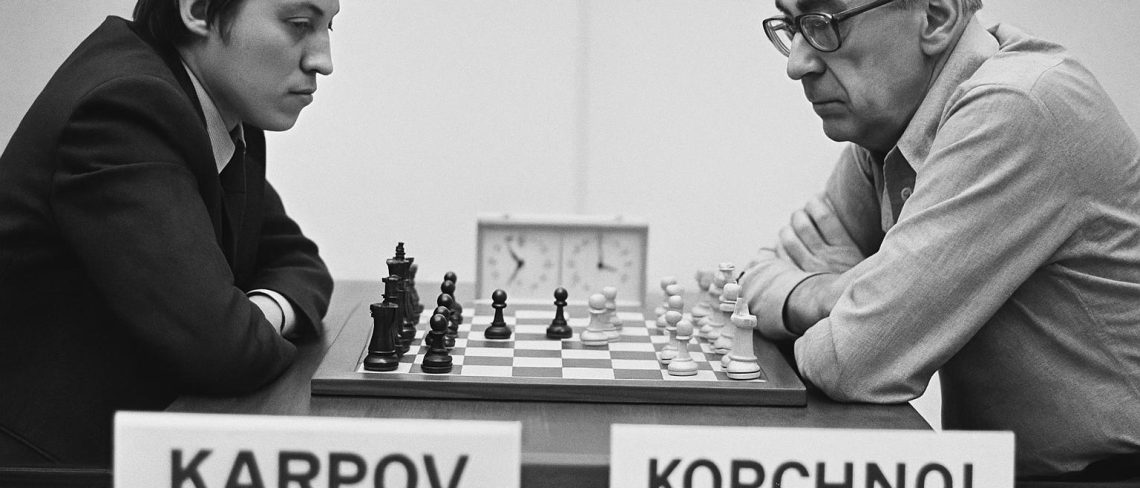
The heated rivalry between Anatoly Karpov and Viktor Korchnoi represents one of the most compelling narratives in the history of chess. Stemming beyond mere competitions over the board, their rivalry encapsulates the broader social and political fabric of the time, and encapsulates a microcosm of the geopolitical tensions pervasive during the Cold War period.
Early Encounters
Anatoly Karpov emerged on the chess scene as a prodigy in the early 1970s. Born in 1951, Karpov quickly became a leading chess figure within the Soviet Union, showcasing strategic finesse and an ice-cold demeanor on the board. On the other side stood Viktor Korchnoi, who was born in 1931 and already an established name in the chess world by the time Karpov began to rise. Known for his aggressive style and fierce competitiveness, Korchnoi’s chess prowess was undeniable during this period. Their initial significant encounter took place during the 1974 Candidates Finals. It was in this heated contest that Karpov narrowly edged out Korchnoi, securing his position as a challenger for the World Championship.
The 1978 World Championship Match
The pinnacle of their rivalry was most dramatized during their clash at the World Chess Championship in 1978, hosted in Baguio City, Philippines. This event was not just a contest of chess skills; it was suffused with ideological undertones, as Korchnoi had defected from the Soviet Union in 1976, casting himself as a symbol of defiance against Soviet authoritarianism. The match was laden with a multitude of controversies. Among the peculiar disputes, arguments over seating arrangements highlighted the tension, while more bizarre claims included accusations of parapsychological tactics being employed. Even the innocuous act of delivering yogurt to players’ tables became a point of contention, illustrating the fraught nature of the environment.
The Psychological Warfare
The psychological dimension of the rivalry was as intense as the chess itself. Korchnoi, as a defector, was a polarizing figure, and this added an extra layer of pressure to an already tense affair. On a board marked by chess pieces, every move was shadowed by the players’ personal histories and the wider geopolitical backdrop. Karpov ultimately triumphed in this fierce battle, retaining his champion’s title with a score of 6-5 after an exhausting sequence of 32 games. Beyond the strategic moves, the match served as a testament to the psychological gamesmanship intertwined with chess at the highest level.
The 1981 Rematch
The narrative of the Karpov-Korchnoi rivalry carried forward into their rematch at the World Chess Championship in 1981. Hosted this time in Merano, Italy, the environment of the match had shifted. Karpov entered the competition not only as the reigning world champion but also as a more consolidated force in the chess world. Displaying tremendous form, Karpov decisively outplayed Korchnoi, winning with a dominant score of 6-2. While the match lacked some of the high drama of their 1978 encounter, it highlighted Karpov’s ascent to a position of strength and stability within the realm of chess competition.
Contributions to Chess
Beyond their intense personal rivalry, both Karpov and Korchnoi have made significant contributions to the game of chess, each in their unique way. Karpov’s mastery of positional play and his prowess in endgames have made his style of play a subject of study for chess enthusiasts and professionals worldwide. In contrast, Korchnoi’s tenacity and unyielding fighting spirit have left a legacy of resilience, earning him a revered status in the annals of chess history. Both have also enriched chess literature with their writings, having authored numerous books that continue to inspire and educate players.
Legacy of the Rivalry
The Karpov-Korchnoi rivalry transcends a mere sequence of chess games. It serves as a window into the intricate interplay of sports, politics, and personal ambitions during a turbulent epoch marked by Cold War tensions. Their legendary encounters continue to be a rich topic for analysis and discussion, offering profound lessons in strategy, perseverance, and the psychological dimensions of high-level competitive chess.
For readers interested in delving deeper into the specifics of their matches and obtaining a detailed analytical perspective, various chess resources such as ChessBase and The World Chess Federation offer extensive archives and literature. These resources provide comprehensive coverage of not just the moves on the board, but the broader context that shaped this memorable rivalry. Their legacy serves as a perpetual reminder of the profound connection between chess and the world at large, a connection marked by a strategic dance as timeless as the game itself.