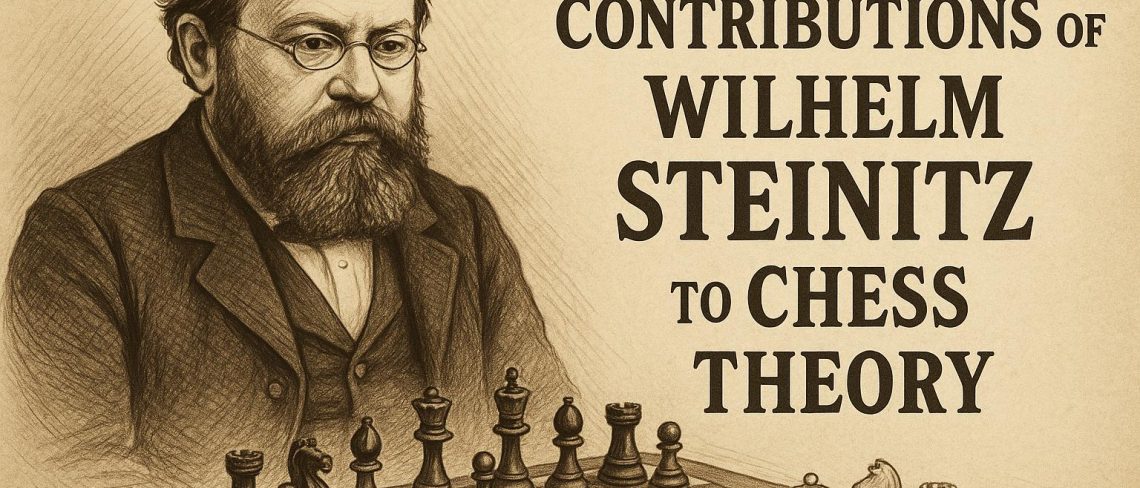
Wilhelm Steinitz: Architect of Modern Chess Theory
Wilhelm Steinitz, renowned as the first official World Chess Champion, occupies a pivotal position in the annals of chess history. His contributions to chess theory have not only revolutionized the manner in which the game is played but have also established foundational concepts critical to the contemporary understanding of chess. This article delves into the elements of Steinitz’s approach and explores how his theories continue to influence the chess world.
Steinitz’s Positional Approach
Steinitz’s innovative contribution to chess was the establishment of a positional approach, marking a departure from the dominant romantic style of the 19th century. The romantics of chess emphasized aggressive tactics, speculative sacrifices, and rapid attacks. In stark contrast, Steinitz advocated for a strategic and more judicious approach, emphasizing the importance of internal harmony of the pieces and control over the chessboard.
Steinitz’s Laws: The foundation of Steinitz’s ideas is encapsulated in a set of principles widely referred to as Steinitz’s laws. He posited that a successful game requires a solid understanding of basic positional concepts such as pawn structure, control of the center, and the importance of piece activity. His systematic approach laid the groundwork for what would later evolve into systematic positional play, wherein players aim for incremental but sustainable advantages.
Key Concepts Introduced by Steinitz
Steinitz’s chess theory introduced several enduring concepts that are indispensable to modern chess strategy:
Accumulation of Small Advantages: Central to Steinitz’s theory is the idea that rather than seeking rapid victories, players should aim to accumulate small, incremental advantages. This can be achieved through improved piece positioning, leveraging space, or weakening an opponent’s pawn structure. Over time, these small edges can translate into a dominant position, ultimately leading to victory.
Dynamic Balance and the Defense: Another vital contribution of Steinitz was his emphasis on maintaining a dynamic balance between offense and defense. He argued that, even when under pressure, a player could concoct solid defensive resources that were previously underestimated in earlier chess play. This challenged the assumption that defense was inherently weaker and instead promoted the view that defense could be as formidable as offense.
The Shift from Romanticism to Positional Play
During the 18th and 19th centuries, chess was predominantly seen as a romantic pursuit. Players often sought spectacular moves and mesmerizing sacrifices at the risk of sound strategy. Steinitz, however, instigated a paradigm shift. He viewed chess through the lens of a scientific approach—each move was a part of a strategic tapestry. His theories advocated for a deeper understanding of each position and fostered the evolution of chess as a game requiring profound thought and analysis.
Enduring Concepts and Their Evolution
The lasting impact of Steinitz’s theories can be seen in how chess has evolved into a game that values strategy over mere tactics. Key concepts like controlling the center, prioritizing piece activity, and maintaining pawn structure have become integral. Steinitz laid the foundations, and future generations, including legendary figures such as Emanuel Lasker and Jose Capablanca, built on them.
Legacy and Influence
Initially, Steinitz’s contributions to chess theory met with resistance because they contradicted prevailing norms. As his ideas gained acceptance, his strategic insights profoundly influenced both contemporary and future generations of players and theorists. His systematic, almost scientific, approach has been echoed by many of the greatest players, including champions from technical eras like Anatoly Karpov, renowned for their methodical play and understanding of Steinitz’s principles.
Writings and Teaching: Steinitz’s impact on chess was not limited to his contributions in competitive play. He was also a prolific writer and educator. His numerous articles and books ardently promoted his chess theories, providing valuable instructional resources for aspiring players. These writings remain crucial for understanding his strategic approach and continue to serve as inspiration for studying chess theory.
Steinitz’s Role Beyond the Board
Apart from his tangible contributions on the board and in literature, Steinitz redefined how chess was viewed culturally. As the first official world champion, his influence extended beyond technical theories. He legitimized and elevated the game to a prestigious competition of intellect. In promoting his ideas, Steinitz played an instrumental role in the shift of chess from leisure activity to a professional sport and academic pursuit.
Impact on Future Champions
Many world champions who followed in Steinitz’s footsteps adopted his principles and adapted them to their style. Players like Bobby Fischer, whose technical dominance in the mid-20th century introduced a new era of professional rigor, echo Steinitz’s philosophy. Fischer emphasized the meticulous aspect of the game and took positional play to unprecedented heights, much akin to Steinitz’s early teachings.
Conclusion
The legacy Wilhelm Steinitz left in the world of chess is profound. Not only was he a formidable player, but also a pioneering theorist who revolutionized the strategic and tactical complexity of the game. His contributions were indeed instrumental in transitioning chess from a romantic endeavor to a strategic, deep, and nuanced competition. Thus, Steinitz is justly celebrated as a foundational figure in the evolution of modern chess theory. His influence is perpetual, with many of his ideas continuing to shape how chess is understood and played even today.