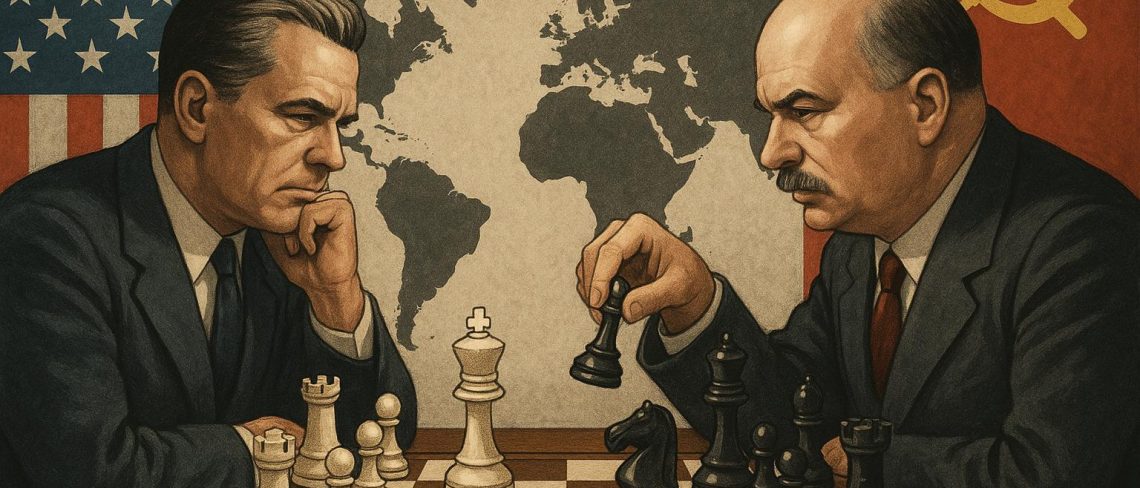
The Influence of Chess in Cold War Politics
During the Cold War, the geopolitical tension between the United States and the Soviet Union transformed numerous arenas into symbolic battlegrounds. One such arena was the game of chess, which rose to prominence as a potent emblem of intellectual and ideological supremacy. This ancient and strategic game served purposes far beyond mere entertainment or simple sporting competition. Its victories were heralded as ideological triumphs, serving as a microcosm for the larger global conflict that was unfolding.
The Soviet Chess Dominance
The Soviet Union’s focus on chess development was a deliberate strategy aligned with its broader political and cultural objectives. The state played a proactive role in embedding chess into the educational and cultural framework of the country. By establishing special schools and training centers, the Soviet Union created environments where chess could flourish. For the Soviets, chess epitomized intelligence, discipline, and the methodical strategy they equated with the success of their socialist and communist ideologies. Not only did these initiatives produce world-renowned chess players, but they also positioned the Soviet Union prominently on the international stage, where every Soviet victory was celebrated as a testament to the communist regime’s robustness and intellectual preeminence.
Fischer vs. Spassky: The Cold War Chess Match
The 1972 World Chess Championship match between American Bobby Fischer and Soviet Boris Spassky epitomized the Cold War conflict. Reykjavik, Iceland hosted what would become a symbolic event, transcending the typical boundaries of sport. Fischer, representing the United States, faced Spassky, who embodied the long-standing Soviet chess dominance. Fischer’s win was not just a personal milestone but an event laden with political ramifications. It was interpreted in the United States as a testament to the efficacy and superiority of its capitalist system and the ideals of individualism and personal innovation. The event proved significant, highlighting how deeply intertwined sports and politics had become during this tumultuous period.
Ideological Implications
Throughout this era, victories in chess were potent tools used to validate the effectiveness of the respective political systems of the U.S. and the Soviet Union. For the Soviets, each victory was framed as evidence of the strengths inherent within communism, demonstrating collective achievement and ideological discipline. Conversely, American successes were portrayed as proof that capitalism fostered unparalleled creativity and individual brilliance. Analysts and strategists delved deeply into these chess matches, scrutinizing them not only as sporting events but as instruments of soft power that could alter perceptions and influence international relations.
The Legacy of Chess in Cold War Politics
In retrospect, the role of chess during the Cold War is viewed as a distinctive historical example of sports interweaving with global political dynamics. This intense period of using chess as a medium for political expression left a lasting mark on the game’s global perception. It shaped not only the way chess was played and viewed but also the narratives attached to it. As history looks back at this period, it is clear that chess was a symbolic battlefield that mirrored the larger ideological and political struggles between the world’s two superpowers.
The echoes of those intense chess matches of the past continue to influence the game today. They are reminders of how chess transcended its traditional boundaries, morphing into a tool for influence and political messaging, leaving a legacy that underscores both the complexity and the potency of sports as vehicles for ideological confrontation.
For those interested in delving deeper into the subject, resources such as Chess.com and the United States Chess Federation offer comprehensive historical insights. These platforms provide detailed accounts of major chess events, including those pivotal Cold War encounters, highlighting the intertwining of chess and political aspirations during that era.