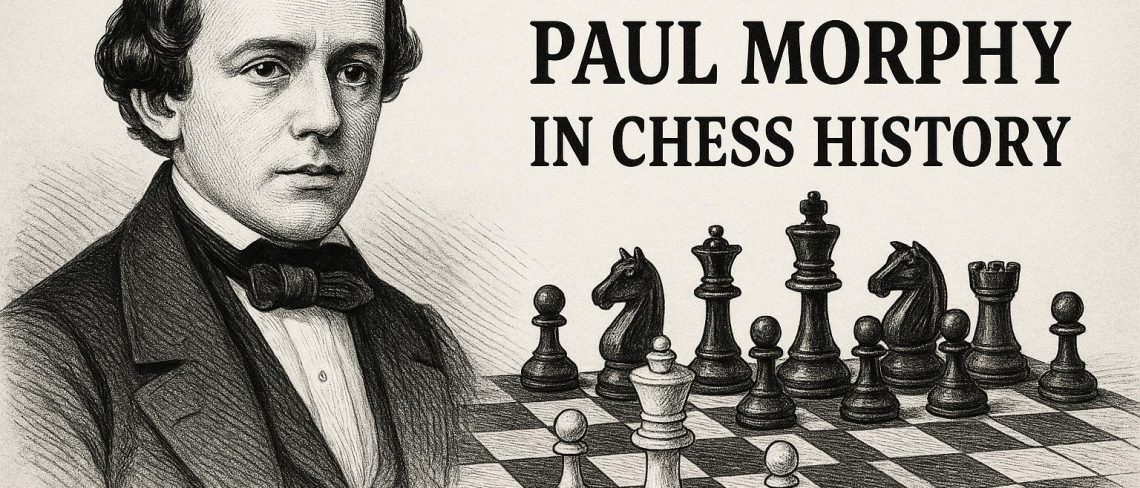
Introduction to Paul Morphy
The legacy of Paul Morphy in chess history is both profound and enduring. Born on June 22, 1837, in New Orleans, Louisiana, Morphy is widely regarded as one of the greatest chess prodigies and a pioneering figure in the game. His influence extends beyond his brief but brilliant competitive career, which was primarily concentrated in the 1850s.
Early Life and Chess Origins
Paul Morphy’s chess journey began at a young age. He learned the game by observing his elders and quickly demonstrated exceptional talent. By the age of 12, he was defeating experienced players with apparent ease. His rapid rise in the chess world was marked by a keen strategic understanding and an ability to visualize complex positions effortlessly.
From an early age, Morphy was exposed to a stimulating intellectual environment. His family recognized his talent and supported his development by allowing him to engage with adult players and participate in local matches. This upbringing played a crucial role in refining his understanding of chess dynamics, allowing him to develop a nuanced perspective on positional play and tactical execution.
Impressive Competitive Record
In his short competitive span, Morphy left an indelible mark on the chess community. Most notably, he achieved widespread fame with his performance in the first modern international chess tournament in 1857, held in New York. Morphy emerged as the clear victor, showcasing not only his skill but also his unique approach to chess.
The 1857 tournament was a pivotal event in Morphy’s career, where he outperformed many of the era’s best players. His participation was marked by an astounding series of victories that demonstrated his superiority in both tactical genius and strategic depth. These matches cemented his reputation as a formidable opponent and laid the foundation for his future endeavors on the international stage.
Morphy’s competitive achievements were not limited to formal tournaments. He sought out and defeated many of the best chess minds of his time in casual encounters and friendly matches. His willingness to challenge the leading players worldwide highlighted his commitment to honing his skills and serving as a testament to his unwavering pursuit of chess excellence.
Influence on Chess Tactics and Strategy
Morphy introduced new tactical ideas that revolutionized chess play. His ability to foresee tactical opportunities set him apart from his contemporaries. His legacy includes the popularization of open-game strategies that emphasize quick development and control of the center. His strategic foresight and creativity remain subjects of study and admiration among chess enthusiasts and professionals alike.
The open-game strategies Morphy employed were characterized by a focus on rapid piece development and central control, which are now fundamental principles in modern chess strategy. His approach encouraged dynamic play and facilitated active engagement between players, contrasting with the previous, more passive styles that dominated earlier chess games.
One of Morphy’s lasting tactical innovations was his emphasis on exploiting his opponents’ weaknesses by initiating tactical sequences that capitalized on errors and vulnerabilities. His games frequently featured brilliant sacrifices designed to achieve superior positions, often leading to decisive victories. This method of play inspired subsequent generations of chess players to explore more aggressive and creative avenues in their games.
Legacy and Impact on Modern Chess
Although Morphy retired from competitive chess at a young age, his influence continues to be felt. His games serve as instructive examples of tactical brilliance and strategic thinking. Chess historians regard him as a key figure in the evolution of modern chess principles.
Morphy’s retirement from chess has intrigued historians who speculate about the potential impact he might have had had he continued his career. Despite his early departure from the competitive scene, his enduring legacy has transcended the limitations of his brief active years. Countless players and enthusiasts have studied his games, drawing lessons and inspiration from his unique approach.
To this day, Morphy’s games are used in chess education and training. Coaches and instructors highlight his matches to illustrate essential concepts in tactical combinations, the importance of opening theory, and the art of exploiting tempo in an opponent’s development. His influence is also seen in the continued emphasis on playing style flexibility and adaptability that remains a hallmark of successful chess strategies.
Beyond his contributions to chess theory, Morphy’s persona has grown into a romantic symbol of untapped potential and genius cut short. His life story, filled with early triumphs and unrealized possibilities, continues to captivate chess enthusiasts and general audiences alike, inspiring books, films, and even theatrical productions.
To explore and learn more about Paul Morphy, his games, and contributions to chess history, interested readers may delve into various online resources and chess databases. His legacy endures as a benchmark for creativity and brilliance in the realm of chess. His story remains an inspiring testament to the heights of intellectual and competitive achievement attainable through dedication, talent, and vision.